Getting Started with Spotify Advertising
Maybe you’re like me and like to listen to music or podcasts while working, cooking, exercising, cleaning…fill in the blank, and Spotify is your go-to app. Well, guess what, it turns out that Spotify can be an effective strategy for nonprofit organizations to expand their reach and engage with a broader audience. As THE juggernaut of streaming services (according to Statista, Spotify is the leader and accounts for 32% of worldwide music streaming subscribers), Spotify advertising offers a range of targeted options based on demographics, interests, and listening habits, ensuring that your message will reach the most receptive ears.
Why Spotify?
Recently, I made a playlist for my FIL’s 80th birthday party. Between the greatest hits of The Beach Boys, Bread, America, Neil Diamond, and other 1970s favorites, we were regularly hearing ads and some of them were actually pretty catchy and effective.
Whether through compelling audio ads that connect personally during an immersive listening experience or eye-catching visual ads while you’re searching for music or a particular playlist, Spotify allows nonprofits to effectively communicate their cause and inspire action while staying within budget. This blend of engagement, emotional connection, and precise targeting makes Spotify appealing to nonprofits looking to increase their impact.
So, now that you’re considering giving Spotify ads a chance, let’s dive in to the details!
Spotify offers a wide-range of targeting options, including:
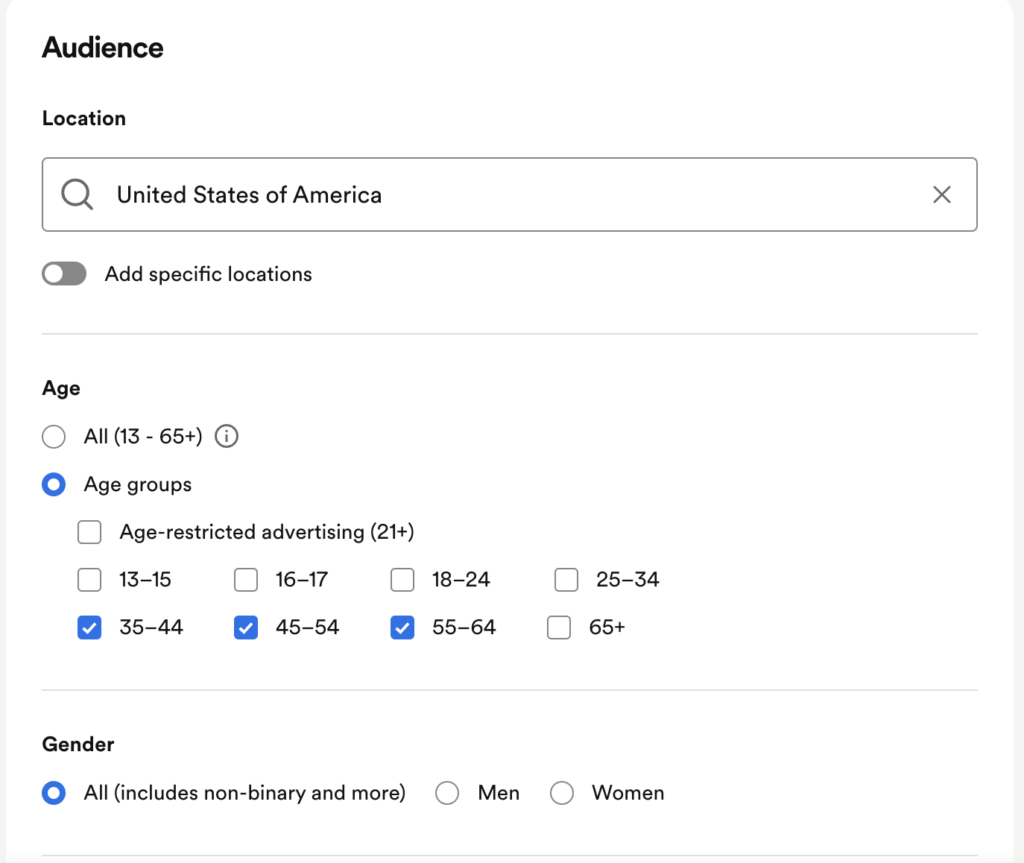
1. Demographic Targeting: Start by selecting basic demographic factors such as age, gender, and location. Spotify allows you to narrow your audience to specific regions, countries, or cities, which is particularly useful if your nonprofit operates locally or in specific areas.
2. Interest-Based Targeting: Spotify allows you to target users based on their interests, which can be inferred from their listening habits, playlists, and favorite genres. For example, if your nonprofit is related to environmental conservation, you might target listeners of podcasts and music related to nature and sustainability.
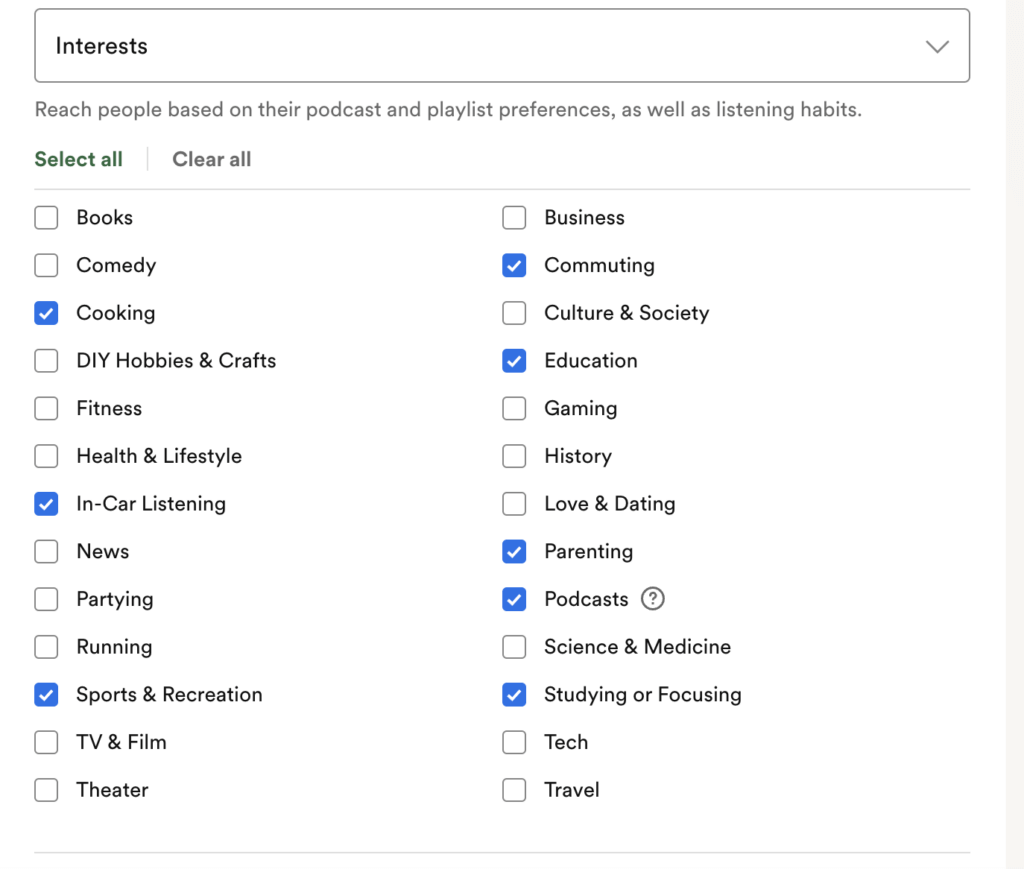
3. Behavioral Targeting: This includes targeting based on users’ listening behaviors and activities. For instance, you can target users who frequently listen to certain types of music or podcasts. So, if your nonprofit focuses on education, targeting listeners of educational or academic content will likely be effective.
4. Real-Time Context Targeting: Spotify’s unique feature allows advertisers to reach people based on what they are doing in real-time—like studying, cooking, or working out. This can be especially powerful for delivering your message at a time when it might resonate more deeply.
5. Playlist Targeting: If Spotify users regularly listen to certain playlists, such as workout or relaxation playlists, you can target ads to appear during these specific listening experiences. This can connect your message with a relevant moment in a listener’s day.
6. Genre Targeting: You can also define your audience by the genres they listen to most. This helps in aligning your message with the music that speaks to their personal tastes and lifestyle.
7. Podcast Targeting: If your target audience is more likely to be engaged with podcast content, Spotify allows you to place ads within specific podcasts that align with your nonprofit’s mission or appeal to your desired demographic.

Spotify Budgets
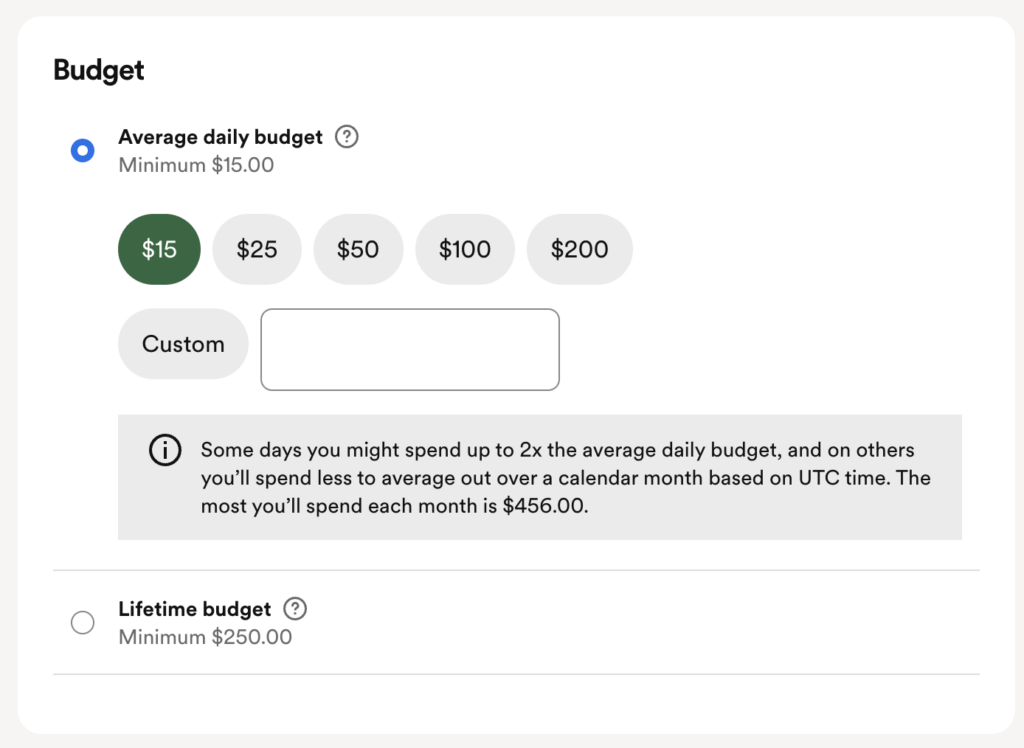
Back in the early days of Spotify ads, it was too expensive for smaller brands and organizations. Fortunately, that’s no longer the case. Spotify lets you either set a daily budget or lifetime budget. The minimum lifetime budget is $250.
To track your Spotify campaign’s activity, you’ll need to install the Spotify Pixel on your website or add it via Google Tag Manager.
Using Spotify’s analytics tools is helpful for refining your audience targeting. And just like Meta or Google Ads, Spotify provides insights into how your ads perform, who engages with them, and other valuable data to continuously improve your targeting strategies.
By leveraging these targeting options, you can craft more personalized and effective ad campaigns on Spotify, ensuring that your nonprofit’s message is heard by the most appropriate audience, maximizing impact and engagement.

Spotify offers a range of formats, including:
Audio Ads: These are 15 to 30-second audio clips played during breaks. They are cost-effective and can convey a concise message. Get details here.
Responsive Display Ads: Visual banners displayed at the bottom of the Spotify app. These can complement audio ads by providing visual information and a direct link to your website. Get details here.
Video Ads: More engaging but also more expensive. If budget allows, these can make a strong impact during ad breaks. Get details here.

Spotify Ad Studio
Ad Studio: Spotify’s self-service advertising platform allows you to create and manage ads with a relatively low minimum spend (around $250). You can set up your campaign, choose your audience, and track the performance of your ads.
Optimize for Timing and Frequency
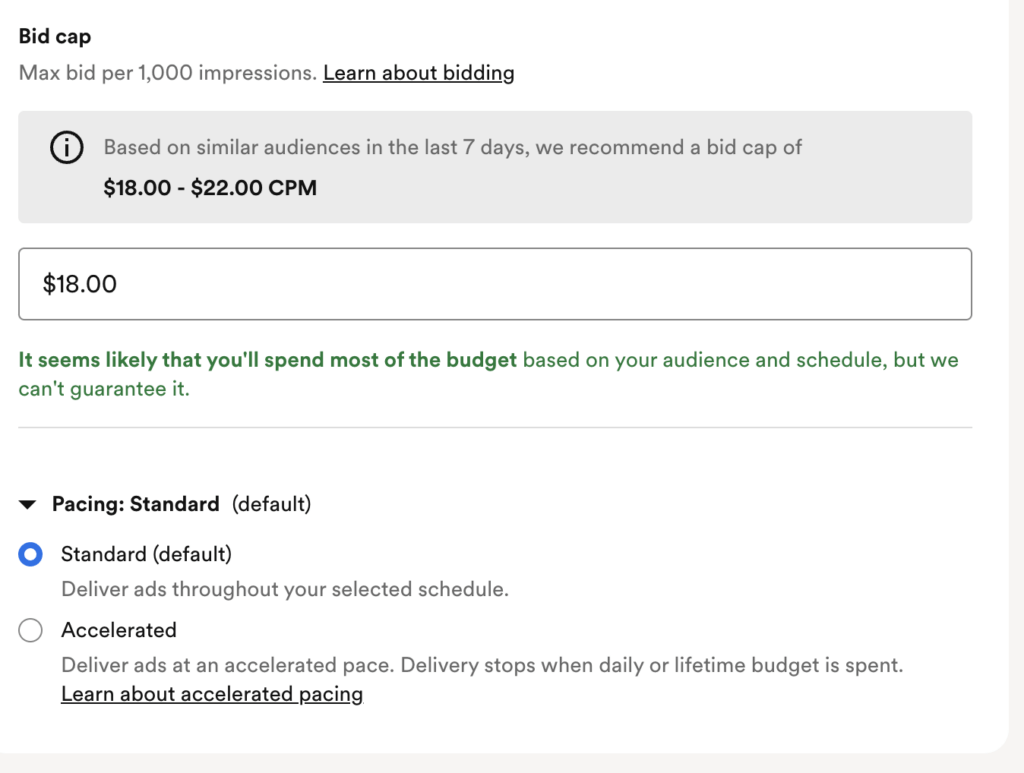
Peak Times: Schedule your ads when your target audience is likely to be listening, such as morning and evening commutes or working hours.
Frequency: Ensure your ads are played enough to be memorable but not so often that they become annoying.
Measure and Adjust
Analytics: Use Spotify’s analytics tools to track how many listeners are engaging with your ads and what actions they are taking afterward.
Feedback and Adjustment: Be prepared to continuously refine your ads based on performance. This could mean changing the ad copy, adjusting the target audience, or reallocating the budget between different ad types.
If you’re interested in exploring paid advertising on Spotify, contact us today!