
Creative Rut? Use Brainstorming Techniques to Climb Your Way Out

Last week, I sat down to write, and the well was dry. Not only was I having trouble focusing (granted, it was Christmas week), I couldn’t think of any topics for our editorial calendar. Not being able to think of any new topic ideas rarely happens to me. I consider myself a pretty creative person with no shortage of ideas. Execution is another story.
Simple Tips for Getting Out of a Creative Rut
Take a Break
Step away from your work and do something else you enjoy. This can help clear your mind and give you a fresh perspective when you return to your work.
Change Your Environment
Sometimes, a change of scenery can be just the thing to get your creative juices flowing. Try working in a different location or even rearranging your workspace. Bonus! It feels great to have a tidy workspace!

Get Some Exercise
Physical activity can help get your blood flowing and can also be a great way to clear your mind. Take a walk, go for a run, or try a new workout to see if it helps spark some creative ideas. I recently started using Asana Rebel to add more structure to my workouts. So far, so good!
Collaborate with Others
Sometimes, working with others can help stimulate new ideas and perspectives. Try working with a group or brainstorming with a colleague or friend.
Freewriting or Stream-of-Consciousness Writing
This technique allows you to write whatever comes to mind without worrying about grammar, structure, or coherence. It can help you get past blocks and come up with new ideas. Don’t censor yourself, just go for it!
Use Prompts of Constraints
Setting limitations for yourself can sometimes be a good way to stimulate creativity. Try using prompts or constraints to inspire new ideas.
Relax and Unwind
Relaxation techniques like meditation or mindfulness can help you clear your mind and focus on the present moment, which can be helpful for brainstorming.
Remember, it’s normal to hit creative roadblocks from time to time. The important thing is not to get too discouraged and to keep trying different techniques until you find what works for you.
Brainstorming Techniques
Ready? Find your Post-Its and take a little trip down the brainstorming rabbit hole with me.
Idea Tree
An idea tree is a visual brainstorming tool that helps you organize and expand upon your ideas. It consists of a central idea or topic at the top, with branches representing subtopics. These subtopics can have their branches, representing even more specific ideas.

Here’s an example of how an idea tree might look:
Central Idea: Vacation Destination
Beach
Beachfront hotel
- Water sports
- Laying on the beach reading while drinking piña coladas
Mountain
Cabin rental
- Hiking trails
- Skiing and snowboarding
City
Posh hotel
- Museums, galleries, and sightseeing
- Restaurants and food
Venn Diagram
Here’s an example of how a Venn diagram might be used for brainstorming:
Idea 1: Vacation Destination
- Warm weather
- Beaches
- Outdoor activities
- Good food
Idea 2: Vacation Destination
- Cold weather
- Ski resorts
- Outdoor activities
- Good food
Idea 3: Vacation Destination
- Moderate weather
- Hotels
- Cultural attractions
- Good food
Venn Diagram:
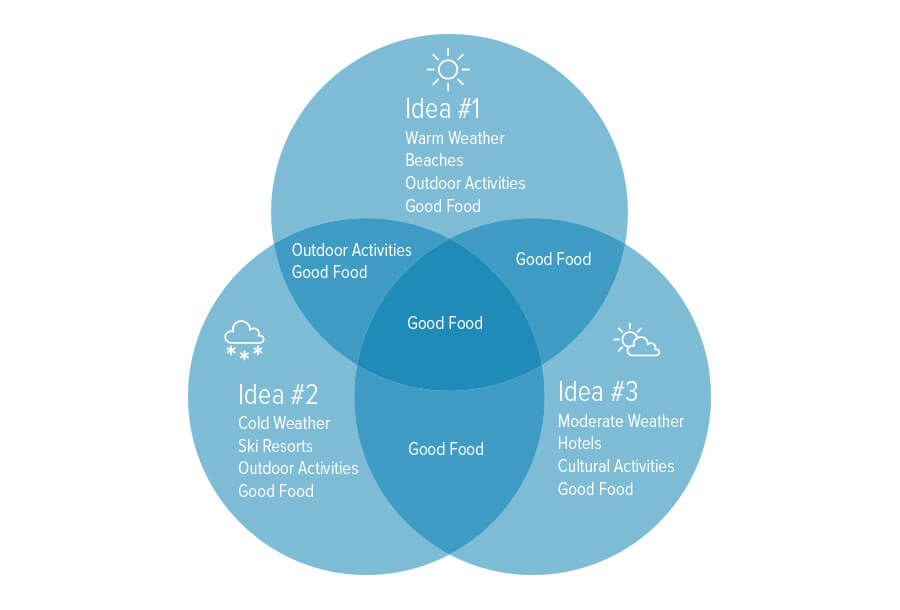
In this example, the overlapping area represents the commonality of good food. By comparing each, you can generate new ideas and areas for further exploration.
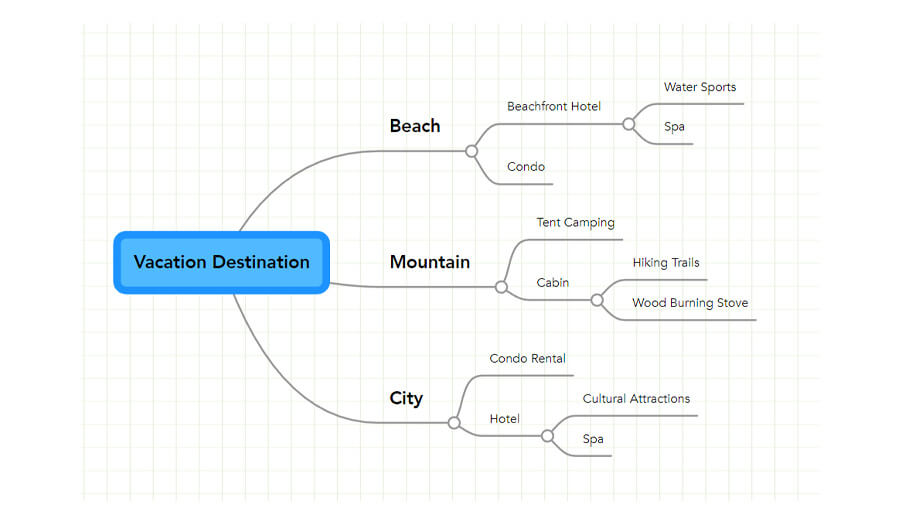
Mind Mapping
Here’s an example of how a mind map might look:
Post-it Notes
Here’s an example of how a mind map created with post-it notes might look:

Improv
The six golden rules of improvisation | Claudine Ullman | TEDxJohannesburg
There are a few ways you can incorporate improvisation into your brainstorming process:
- Warm up with improv games: Before you start brainstorming, try playing some simple improv games to get your creativity flowing. These can be as simple as “Yes, and,” where you build on each other’s ideas by adding to them, or “Word at a Time,” where you create a story by taking turns saying one word at a time.
- Use improvisation techniques in your brainstorming sessions: Try using techniques like “Yes, and,” “Free Association,” and “Object Work” to come up with new ideas. “Yes, and” involves building on each other’s ideas and expanding upon them. “Free Association” involves quickly saying the first thing that comes to mind in response to a prompt or idea. “Object Work” involves using an object as inspiration for a scene or idea.
- Practice improvisation on your own: If you’re working on your own, try improvising a scene or story based on a prompt or theme. This can help you practice coming up with ideas quickly and thinking on your feet.
Incorporating improvisation can help you think creatively, collaborate effectively, and come up with new ideas.
I’m sure by now you get the idea. I’m ready for a vacation. (Psst. I’ll be in Mexico next week.) No, but really, brainstorming techniques can be a powerful tool for getting out of a creative rut. They can stimulate ideas and break through mental blocks by encouraging free thinking.
Give yourself permission to come up with as many ideas as possible, no matter how unrealistic they may seem! Doing so can expand your thinking and find new ways to approach problems. So next time you’re feeling stuck, try using some brainstorming techniques to get your creative juices flowing and find new solutions to your challenges.